Knowledge article
Why neutral atom quantum computing is built for scale and flexibility
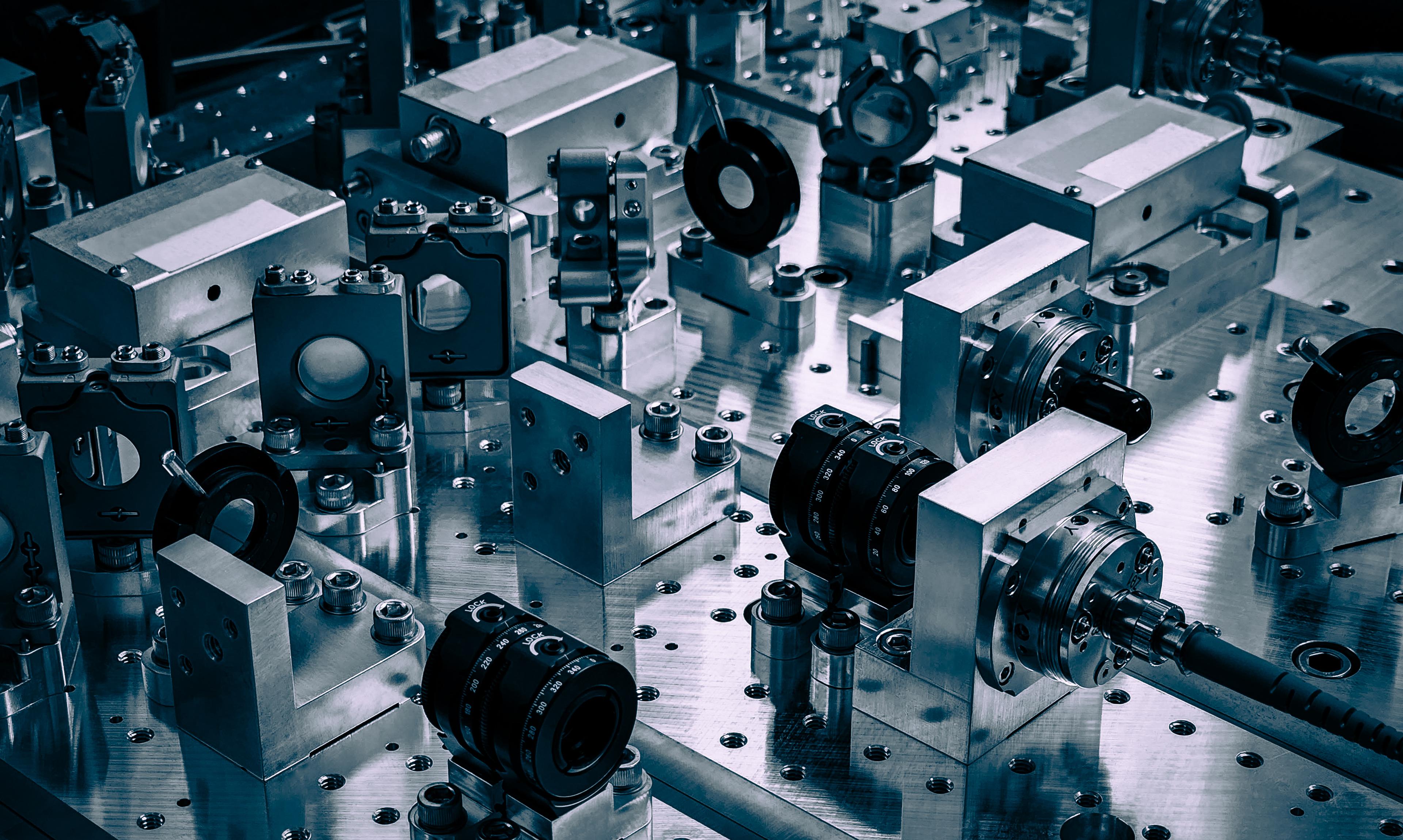
Neutral atom quantum computing is emerging as a leading approach to building larger and more flexible quantum machines. Instead of using fabricated circuits or charged particles, these systems use individual atoms held and controlled by laser light. That difference is central to why neutral atoms are attracting attention as a distinct quantum computing architecture.
Neutral atom computers aren’t the only quantum computing solutions, though. Quantum computing is being developed through several hardware approaches, including superconducting circuits, trapped ions, photonic systems and neutral atoms. All aim to perform quantum computations, but differ significantly in how qubits are created, controlled and connected.
Laser-defined arrays give neutral atom systems a rare flexibility in how qubits are arranged, connected and controlled.
For researchers and organisations exploring quantum computing, neutral atom systems provide an emerging platform for testing quantum algorithms, benchmarking new methods, and understanding where quantum approaches may eventually add value.
How neutral atom quantum computers use atoms as qubits
In a neutral atom quantum computer, quantum information is stored directly within individual atoms, often in highly stable internal states such as nuclear spin. These atoms are held in place using highly focused laser beams, which can trap and arrange them into precise patterns only microns apart. Quantum operations are then performed using additional laser light tomanipulate the states of the atoms.
In the case of two-qubit operations, atoms can first be physically moved to a separate area before lasers perform parallel two-qubit operations on them. This flexibility frees the quantum processor from connectivity constraints due to the layout of the qubits.
What makes neutral atom quantum computing different
A defining feature of neutral atom quantum computers is that they are not limited to a fixed wiring pattern between qubits. Because the atoms are neutral, they can be placed very close together in dense optical arrays without the same electrical wiring challenge that constrains some other modalities. The architecture therefore offers a high degree of connectivity and control compared with systems where interactions are constrained by the physical layout of a chip.
This matters because many quantum algorithms require information to be shared between qubits that are not physically adjacent. In architectures with limited nearest-neighbour connectivity, additional operations may be needed simply to move information into the right place. Neutral atom systems can reduce this overhead by enabling more direct interactions across the processor.
This same mechanism enabling effective all-to-all connectivity is also closely linked to ‘reconfigurability’: because the atoms are held in laser-defined traps rather than permanently fabricated into one circuit layout, the atom layout can be rearranged into different geometries for different experiments, algorithms or error-correction layouts. Control is also mediated through light propagating in free space, which can reduce the need for one-to-one physical wiring to every qubit. The processor is therefore physically flexible.
What makes neutral atom quantum computers stand out?
- Scale: More Qubits can be added by expanding arrays of trapped atoms.
- Connectivity: Qubits can interact more flexibly across the processor.
- Reconfigurability: Atom layouts can be rearranged.
- Coherence lifetime: Stable atomic states can hold quantum information for longer periods.
Among the distinctive advantages is the physical architecture, which enables dense arrays of trapped atoms, flexible connectivity, and reconfigurable layouts. These factors all work hand-in-hand to facilitate a range of experiments, including quantum error correction and implementation of arbitrary logical qubits.
Why neutral atom quantum computers can scale quickly
Neutral atom systems are also attracting attention because they offer a comparatively direct route to larger physical machines. The qubits are individual atoms, which are naturally identical and can be held in large arrays of optical tweezers. Because the atoms are small, neutral and optically controlled, many more qubits can be added by expanding the trapped array rather than by substantially redesigning the overall system footprint.
As optical control systems improve, neutral atom platforms can add capacity by trapping more atoms and organising them into larger, cleaner and more programmable arrays while preserving the core architecture.
The promise of neutral atoms is more flexible machines that are scalable, reconfigurable, and more easily controlled by light.
Another important feature is coherence. Certain neutral atom platforms, such as those developed by Atom Computing, use atoms with closed outer electron shells, where quantum information is encoded in nuclear spin, which is less sensitive to environmental disturbances.
This results in longer coherence times, giving qubits more time to hold quantum information. This is essential for performing increasingly complex experiments.
What can neutral atom computers help researchers explore?
- Simulate complex quantum systems, such as molecules, materials and many-body physics
- Test quantum algorithms on larger arrays of physical qubits
- Compare performance between physical-qubit execution and logical-qubit execution
- Explore error-correction methods and logical qubit behaviour in practice
- Complement classical computing by investigating where and how quantum methods may add value
- Build hands-on expertise with quantum workflows before fault-tolerant systems mature
Neutral atom quantum computing and the next stage of the field

Magne is expected to be one of the most powerful quantum computers when it goes live in early 2027.
Together with partners Atom Computing and Microsoft, we are deploying Magne, a neutral atom quantum computer designed to provide users with access to both physical and logical quantum computing environments at scale.
Together with partners Atom Computing and Microsoft, we are deploying Magne, a neutral atom quantum computer designed to provide users with access to both physical and logical quantum computing environments.
Magne integrates a physical hardware layer that contains over 1,200 physical qubits with all-to-all connectivity. Quantum information is encoded in the nuclear spin of Ytterbium-171 atoms, serving as the physical qubits. Lasers are used to manipulate the state of these qubits, thus processing quantum information.
Unlike current quantum computers, Magne will have both physical and logical execution modes for users to choose from. In logical mode, the system performs real-time error correction, yielding roughly 50 logical qubits based on the 1200+ physical qubits, depending on the choice of error-correction code.
Magne is expected to be fully operational in early 2027.
Learn more about Magne here.