16 October 2026
QuNorth and Microsoft Quantum hold Quantum Error Correction workshop
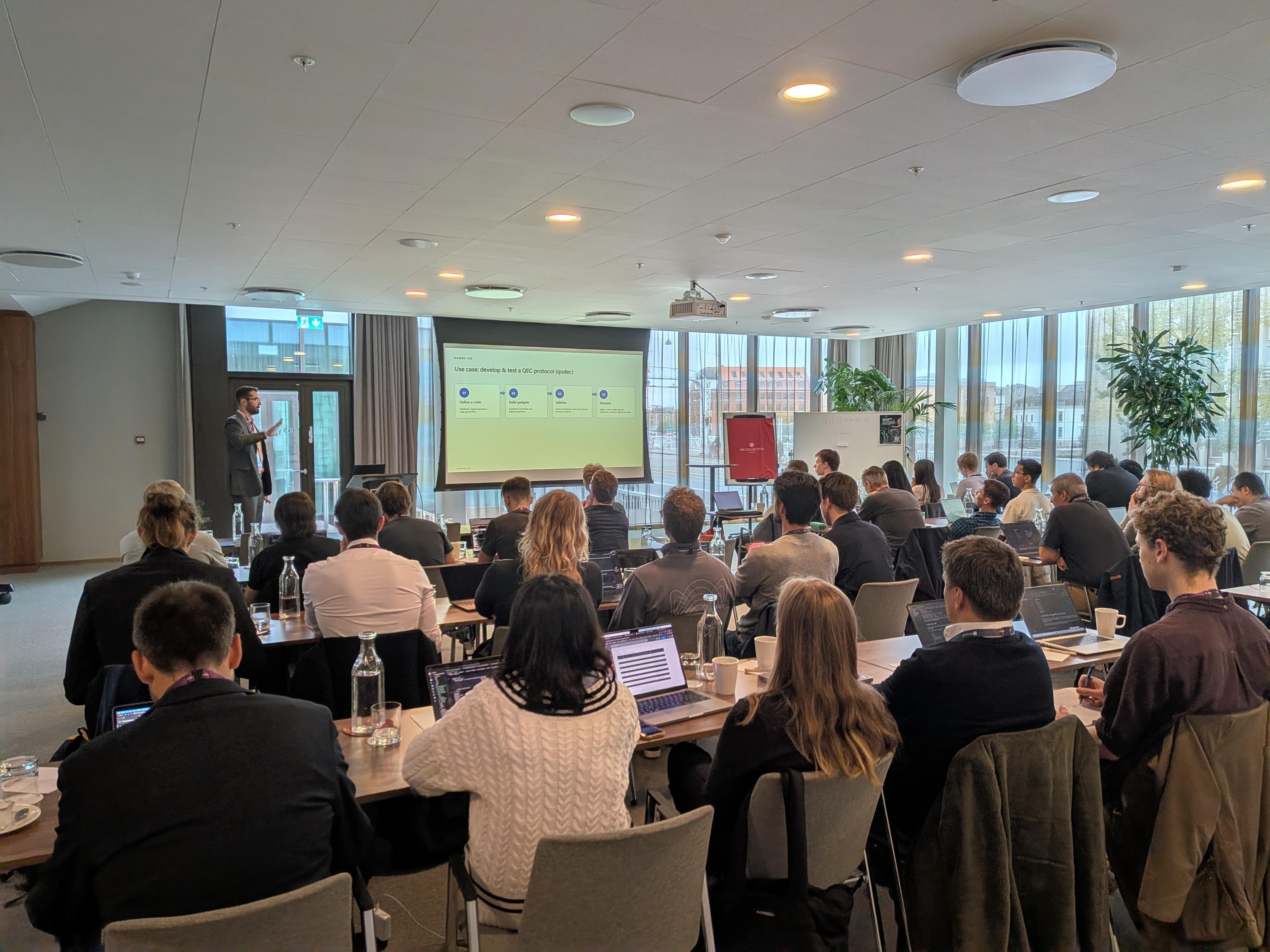
At a hands-on workshop in Copenhagen, QuNorth and Microsoft helped Nordic researchers explore new software tools for making quantum calculations more reliable.
Quantum computers store and process quantum information using qubits, which are extremely sensitive to noise and error. Errors can quickly accumulate and derail a calculation, making quantum error correction(QEC) essential to the development of useful, reliable quantum computing systems.
That challenge was the focus of a full-day workshop hosted by QuNorth and Microsoft Quantum in Copenhagen on 7 October. Members of the Nordic QEC community joined the Microsoft engineers and researchers building the tools to explore how software can help them design QEC codes, test their performance, and estimate the resources required to run them. The workshop gave Nordic researchers access to a preview of Microsoft’s Quantum Development Kit for Error Correction (QDK-EC), a new collection of software tools for developing and testing QEC codes.
Building practical experience with Microsoft’s quantum software tools
The day began with an introduction to the Quantum Development Kit (QDK) and its role across quantum research. Microsoft’s team provided an overview of QDK in general, before focusing on QDK-EC and the tools most relevant to the researchers in the room.
Participants then moved into guided, hands-on exercises. Working through an end-to-end example, they designed and characterised a QEC code, tested it, and examined how it could be deployed. A deeper technical session showed how the toolkit connects with software already used by researchers, including Stim, paulimer, binar, and deq.
The afternoon broadened the discussion to quantum resource estimation and the future researcher experience on MAGNE, the Level 2 quantum computer being built at QuNorth, with hardware developed by Atom Computing, and software by Microsoft. Magne will be launched in 2027 for shared use by researchers, startups, and enterprises throughout the Nordic region.
Participants tested the workflow on their own examples, raised technical questions in an open Q&A, and shared feedback directly with the Microsoft team developing the tools.
Quantum error correction is one of the central challenges in building useful quantum systems. Bringing researchers together to work directly with the tools we are building for them to develop, test and deploy QEC codes gives us valuable insight into how we can support their work and improve the development experience.
Preparing researchers to use MAGNE
Microsoft’s QDK-EC is planned as part of the standard software available to Magne users. Giving Nordic researchers a preview and hands-on early experience with this tool is an important step towards making MAGNE productive from the outset, in addition to helping accelerate QEC research in the region. QuNorth CPO, Cathal Mahon, gave a detailed presentation on how workshop participants could submit proposals to QuNorth to access Magne for their QEC research.
The workshop also created space for Nordic researchers, the QuNorth team, and Microsoft engineers and scientists developing the toolkit to exchange perspectives on current workflows, technical needs, and the experience and skills researchers will need when the system becomes available.
Magne will give Nordic researchers a platform for advanced quantum computing, but access alone is not enough. Workshops like this help build the practical knowledge, skills, and collaborations needed to turn that capability into strong research efforts and results.
Join the next workshop
The next full-day workshop, Microsoft QDK: Tools & Applications, will take place in Copenhagen on 9 December 2026. Participants will explore the latest capabilities in Microsoft’s quantum development tools before moving into technical deep dives and hands-on quantum chemistry exercises, with opportunities to experiment and engage directly with Microsoft engineers and researchers.t will introduce the latest capabilities in Microsoft’s quantum development tools before moving into hands-on quantum chemistry exercises.
Interested in taking part?
Submit the Expression of Interest form here by 30 October 2026. Capacity is limited, and selected attendees will be notified by 13 November.